Sustainable waste management starts with preventing unnecessary waste, reusing useful items and recycling materials correctly. For households and businesses in Liverpool, these practical steps can conserve resources, reduce avoidable rubbish and support a cleaner local environment.
Recycling is important, but it should not be the first solution for every item. Buying carefully, repairing products and extending their useful life can prevent waste before disposal becomes necessary.
Understanding the Waste Hierarchy
The UK waste hierarchy ranks waste-management options from most to least preferred: prevention, preparing for reuse, recycling, other recovery and disposal. It provides a practical framework for deciding how materials should be handled. Read the official waste hierarchy guidance.
Prevent waste before it is created
Buy only what is needed, reduce unnecessary packaging and improve stock management. Preventing waste avoids the need to collect, process or dispose of materials later.
Reuse and repair useful items
Repair furniture and equipment where practical, donate suitable belongings and reuse containers. Keeping products in use can reduce demand for replacements.
Recycle accepted materials
Separate paper, cardboard, glass, metals and suitable plastics according to local collection rules. Correct sorting helps keep recyclable materials suitable for processing.
Recover or dispose of remaining waste
Some materials may be suitable for energy recovery or other treatment. Waste that cannot reasonably be prevented, reused, recycled or recovered should be disposed of through an appropriate authorised route.
Why Is Sustainable Waste Management Important?
A well-planned approach can conserve raw materials, reduce avoidable waste and improve resource efficiency. Businesses may also identify unnecessary purchasing costs, while households can make better use of the products they already own.
The benefits depend on the materials involved and how they are handled. Recycling alone does not eliminate environmental impacts, which is why prevention and reuse should be considered first.
Practical Waste Reduction Strategies
The most useful improvements are usually simple, consistent and suited to the waste being produced.
- Reduce packaging: Choose products with less unnecessary packaging and review packaging used for deliveries.
- Separate materials: Keep accepted recyclables apart from general waste and follow local instructions.
- Prevent food waste: Plan meals, store ingredients properly and use food before it spoils.
- Repair and donate: Extend the life of usable furniture, clothing and equipment.
- Review purchasing: Avoid ordering excess stock and choose durable or reusable supplies where suitable.
- Keep waste storage organised: Use appropriate containers and prevent materials from becoming contaminated.
Start with the waste stream that creates the biggest avoidable problem, then review whether the change is making a practical difference.
Sustainable Waste Management in Liverpool
Liverpool forms part of the wider Liverpool City Region, where the Zero Waste Strategy sets an ambition to eliminate avoidable waste by 2040. The strategy emphasises reducing waste and making better use of resources. Read the regional waste strategy.
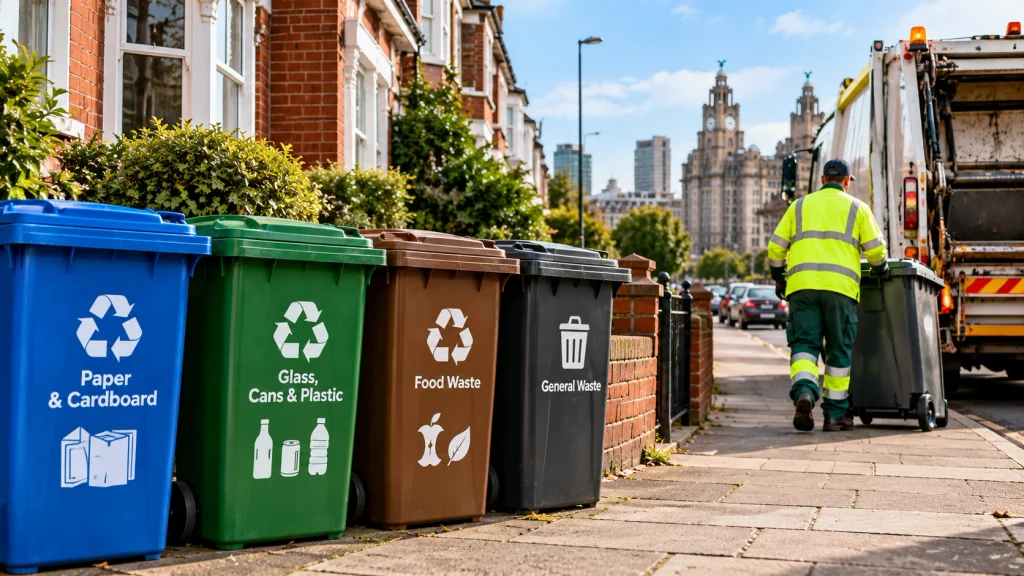
Residents should check Liverpool City Council’s current bin guidance before putting items out for collection. The council’s instructions identify accepted materials for the blue recycling bin, including paper, cardboard, glass bottles and jars, cans, and certain plastic containers. Plastic bags, cling film, food and liquids should not be placed in that bin. Check what goes in each bin.
Collection rules can differ between local authorities, so advice from another UK town may not apply in Liverpool. Check the council’s latest instructions whenever you are unsure about an item.
Sustainable Waste Management for Businesses
Businesses can improve their approach by identifying their main waste streams, reducing unnecessary purchasing and separating materials correctly. Reviewing packaging, food waste, damaged stock and discarded equipment can reveal practical opportunities to prevent waste.
Businesses that need help managing commercial rubbish can explore our commercial waste removal services in Liverpool. Businesses in England must also meet applicable waste-storage, transfer and disposal requirements. They should check that their waste carrier is registered and use the appropriate documentation when required.
What Happens When Recycling Is Contaminated?
Contamination occurs when unsuitable materials are mixed with recyclables, such as food residue, liquids or packaging that a collection service does not accept. This can make sorting more difficult, reduce material quality or cause some items to be rejected.
Empty containers, remove obvious food residue where practical and follow local instructions. An item should not go into a recycling bin simply because it appears recyclable in theory.
Is Recycling Always the Best Option?
No. Prevention and reuse are generally preferred in the waste hierarchy because they can avoid the need to process discarded materials or manufacture replacements.
For example, repairing a usable chair may be preferable to recycling it. If it cannot be used again, an appropriate recycling or recovery route may be available depending on its materials and condition.
How Can Households Reduce Waste?
Plan purchases, use food before it spoils, repair useful belongings and donate items that remain in good condition. Separate accepted recyclables and check Liverpool City Council’s guidance for materials that cannot go in the usual bins. For larger clear-outs, our house clearance service can help remove unwanted household items.
For bulky items, check whether a council collection or an appropriate recycling centre accepts them. If you use a private waste removal service, check that the carrier is legally authorised to transport the waste. If you need help moving individual items or smaller loads, see our man and van service in Liverpool.
How Can You Choose a Responsible Waste Removal Company?
Before booking, confirm what the service will collect, where the waste will be taken and what documentation is provided. Check the carrier’s registration using the relevant government guidance, particularly if you are paying someone to remove household or business waste.
Do not judge a service on price alone. Clear collection terms and responsible handling are important when choosing a provider. If you need unwanted rubbish removed from your property, find out more about our rubbish removal service in Liverpool.
Frequently Asked Questions
What Are the Main Methods of Sustainable Waste Management?
The main methods are waste prevention, reuse, recycling, other recovery and disposal. Prevention and reuse are preferred where practical because they reduce the need to process discarded materials.
What Are the Benefits of Sustainable Waste Management?
It can help conserve resources, reduce avoidable waste and improve material efficiency. Businesses may also identify unnecessary purchasing and waste-handling costs.
How Can Businesses Reduce Waste?
Businesses can review purchasing, reduce excess packaging, manage stock carefully and separate recyclable materials. Their approach should reflect the waste they actually produce.
How Can I Check Whether a Waste Carrier Is Registered?
Use the UK government’s waste-disposal guidance to find the appropriate Environment Agency registration check. Verify the business details before handing over waste.
Conclusion
Reducing waste starts with prevention, followed by reuse, recycling and responsible disposal. Liverpool residents and businesses can make better choices by following local guidance and reviewing how they use and discard materials. Small, consistent improvements can help reduce avoidable waste over time.