Reduce household waste by preventing food waste, reusing everyday items and recycling materials correctly. In Liverpool, small changes to your weekly routine can help you throw away less, keep your home organised and make better use of the items you already own.
Whether you live in a terraced house in Wavertree, a flat near Liverpool city centre or a family home in Aigburth, you can make practical changes without spending more money. This guide covers ten ways to reduce waste, along with local recycling rules and answers to common household problems.
1. Identify Your Biggest Sources of Waste
Before changing your habits, check what your household throws away most often. For one week, pay attention to food scraps, packaging, cardboard, clothes and broken items. This simple waste audit helps you focus on the changes most likely to make a difference.
| Waste type | Practical action |
|---|---|
| Uneaten food | Plan meals and freeze suitable leftovers |
| Cardboard packaging | Flatten and recycle accepted cardboard |
| Unwanted clothes | Repair, donate or reuse them |
| Plastic packaging | Choose products with less packaging |
| Broken items | Check repair or reuse options |
Start with the two biggest categories rather than trying to change everything at once. If food fills most of your bin, focus on shopping and storage; if packaging is the main problem, review what you buy and how you recycle it.
2. Plan Meals and Prevent Food Waste
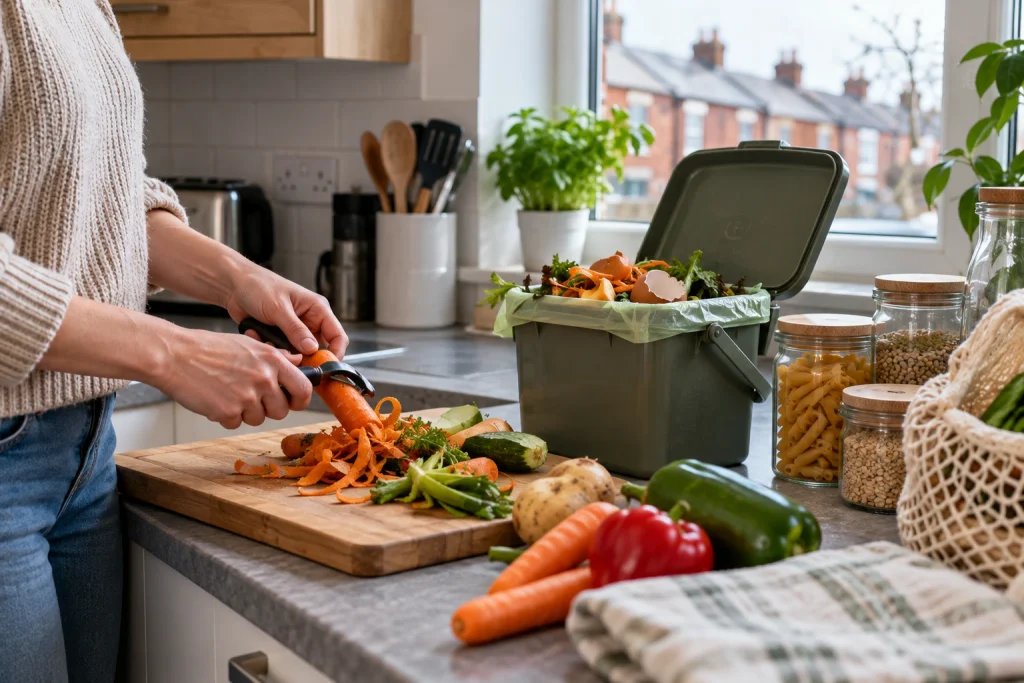
Check your fridge, freezer and cupboards before shopping. Plan meals around ingredients that need using soon, make a shopping list and avoid buying extra food simply because it is on offer. Store food according to its instructions and freeze suitable portions before they spoil.
Planning meals before shopping is an effective way to reduce household waste because it helps prevent unused ingredients and forgotten leftovers. Pay attention to use by dates because they relate to food safety. Best before dates generally concern quality, but you should always follow storage instructions and never eat food beyond its use by date.
3. Reuse Items Before Buying New Ones
Before buying another storage box, cleaning cloth or kitchen container, check whether something you already own can do the job. Suitable delivery boxes can store decorations, old towels can become cleaning cloths, and reusable shopping bags can replace disposable alternatives.
You can reduce household waste by repairing useful items, reusing containers and donating belongings that are still in good condition. Reuse should be practical, not an excuse to keep everything indefinitely. Keep items you genuinely need, offer useful belongings to other people and recycle or dispose of the remainder according to local guidance.
4. Choose Products With Less Packaging
Supermarket shopping and online deliveries can produce a lot of packaging. Where practical, choose loose fruit and vegetables, refill products and items with less unnecessary wrapping. Reusable bags and containers can also help reduce disposable packaging when you use them regularly.
Flatten empty cardboard boxes before placing them in your recycling bin and separate materials that the council does not accept. A recycling symbol does not automatically mean an item belongs in Liverpool’s household collection.
5. Follow Liverpool’s Recycling Rules
Liverpool City Council’s blue bin accepts specified materials, including paper, cardboard, glass bottles and jars, cans, empty aerosols, cartons and certain plastic containers. The council requires accepted recycling to be placed loose in the bin, not inside plastic bags.
Its guidance also says to leave lids on plastic bottles and glass jars, avoid crushing cans or flattening plastic bottles, and flatten cardboard. Plastic bags, cling film, textiles, electrical items and polystyrene should not be placed in the blue recycling bin. Correct sorting supports efforts to reduce household waste, but always check Liverpool City Council’s current recycling guidance before using your bins.
Check the official Liverpool City Council bin guidance before disposing of unfamiliar packaging.
6. Repair Clothes and Household Items
A torn garment, loose furniture handle or broken household item does not always need replacing. Simple sewing repairs and replacement fittings can extend the life of belongings, while a qualified repairer may be able to fix a faulty appliance safely.
Compare the cost of repair with the item’s condition and the price of a suitable replacement. Local repair and reuse activities across Liverpool City Region can also help residents learn practical skills and keep useful items in circulation.
7. Donate Furniture and Unwanted Clothes
A house clear out does not have to mean throwing everything away. Clothes, books, kitchenware and furniture may still be useful to someone else, so consider donation or reuse before arranging disposal.
Check donation requirements first, particularly for upholstered furniture and electrical goods. If you are clearing a property in Toxteth, Kensington, Tuebrook or Old Swan, separate reusable belongings from damaged items before deciding what needs removing.
8. Use the Correct Recycling Centre
Some items cannot go into ordinary household bins and need a different disposal route. Liverpool residents can check the facilities at Old Swan Household Waste Recycling Centre on Cheadle Avenue, L13 3AF, and Otterspool Household Waste Recycling Centre on Jericho Lane, Aigburth, L17 5AR.
Check accepted materials, opening hours and vehicle booking requirements before travelling. Vans, certain trailers and some modified vehicles may need advance booking, so use the official Merseyside Recycling and Waste Authority recycling centre guidance to confirm the current rules.
9. Keep Communal Bins Clean and Correct
Some Liverpool flats and streets use communal waste containers rather than individual wheelie bins. Liverpool City Council says communal blue bins are for loose recycling, while purple bins are for bagged non recyclable household waste.
Keep recycling separate indoors until you can place it in the correct container, and flatten cardboard to save space. Do not leave unwanted furniture or rubbish beside communal bins, as waste left around them may be treated as fly tipping. Report overflowing communal bins to the council.
10. Create a Simple Weekly Waste Routine
A simple routine is easier to maintain than trying to change everything at once. Check the fridge before shopping, separate accepted recycling during the week and inspect your bins before collection day to remove unsuitable items.
If your property has specific collection arrangements, follow the council’s instructions for where and when to present your bins. Liverpool does not normally collect extra bags of general waste or recycling left beside kerbside bins, so reducing the amount you produce can help avoid collection problems.
How Can I Reduce Household Waste for Free?
Use food you already have, repair suitable belongings, reuse containers and donate items that other people can use. You can also avoid unnecessary purchases and choose products with less packaging when practical. These changes require little or no extra spending and can help reduce clutter as well as rubbish.
Why Does My Food Waste Caddy Smell?
Food scraps can develop unpleasant smells when left in a warm indoor caddy for too long. Empty the kitchen caddy regularly into the outdoor food waste container, keep the lid closed and follow the council’s instructions for liners and cleaning.
Liverpool’s food waste collections are being introduced in phases, so check whether the service is available at your address. The council accepts food scraps such as fruit and vegetable peelings, meat, fish, bones, bread, rice, pasta and tea or coffee grounds, but not packaging, liquids or oil. <Cite refs={[“turn701529search1”]}/>
Do I Need to Wash Items Before Recycling?
Empty containers and remove substantial food residue before recycling them. A quick rinse may be enough for suitable packaging, and there is generally no need to scrub disposable containers until they look spotless.
Follow Liverpool’s local instructions for each material. Keeping food and liquids out of recycling can help avoid unnecessary mess, smells and contamination.
What Happens if I Use the Wrong Recycling Bin?
Liverpool City Council may refuse to empty a bin containing unsuitable materials. The council uses a yellow sticker to indicate that incorrect items have been found; remove the unsuitable materials and follow the instructions before the next collection. <Cite refs={[“turn701529search5”]}/>
To prevent this, check the council’s accepted materials list rather than relying only on the recycling symbol on a product. This is particularly important for plastic bags, cling film, polystyrene and electrical items.
Can Liverpool Council Collect Old Furniture?
Liverpool City Council offers a free bulky item collection service for eligible residents, subject to its conditions. You can request up to five eligible bulky items per property, alongside specified limits for small electrical items and textiles. The service is not for full house clearances, building waste or garden waste. <Cite refs={[“turn701529search3”]}/>
If you are clearing an entire property or dealing with mixed rubbish that cannot be handled through your normal bins, a separate removal service may be more suitable. Swift House & Waste Removals offers house clearance in Liverpool and rubbish removal services.
Where Can I Take Household Waste in Liverpool?
Old Swan and Otterspool household waste recycling centres accept specified materials that cannot be placed in ordinary bins. Check current opening times, accepted waste and booking requirements before visiting, especially if you plan to use a van or trailer.
For reusable furniture and household goods, consider donation or reuse first. This can help keep useful items in circulation instead of sending them directly for disposal.
How Do I Check if a Waste Carrier Is Registered?
Before arranging private waste collection, check that the business holds the appropriate waste carrier registration or authorisation. You can use the Environment Agency’s public register to check registration details and should describe your waste accurately when requesting a quote.
Keep your booking or collection information and ask how the waste will be handled. Householders should take reasonable steps to ensure their waste is passed to someone legally allowed to take it.
Frequently Asked Questions
What Is the Easiest Way to Reduce Household Waste?
Start by planning meals, avoiding unnecessary purchases and reusing items you already own. Separating recyclable materials correctly can also reduce the rubbish going into your general waste bin.
How Can I Reduce Food Waste at Home?
Check your fridge and cupboards before shopping, plan meals around ingredients you already have and freeze suitable leftovers. Follow food storage instructions and use food before its use by date.
What Can I Put in Liverpool’s Blue Recycling Bin?
Liverpool’s blue bin accepts specified paper, cardboard, glass, cans and plastic containers. Place accepted items loose in the bin and check Liverpool City Council’s guidance for materials you are unsure about.
Can I Put Plastic Bags in My Recycling Bin?
No. Liverpool City Council’s blue bin guidance excludes plastic bags and cling film. Check the council’s current instructions for the correct disposal route.
Does Liverpool Council Collect Food Waste?
Food waste collections are being introduced in phases, so availability depends on your address. Check Liverpool City Council’s latest guidance to confirm whether your property is included.
Can Liverpool Council Collect Unwanted Furniture?
The council offers a bulky item collection service for eligible items, subject to its conditions and limits. Full house clearances, building waste and garden waste are excluded from this service.
Where Can I Take Household Waste in Liverpool?
You can check Old Swan and Otterspool Household Waste Recycling Centres for accepted materials, opening hours and vehicle booking requirements. Check the current guidance before travelling.
How Can I Check if a Waste Removal Company Is Licensed?
Check the company’s waste carrier registration using the Environment Agency’s public register. Make sure you describe your waste accurately and keep your collection details.
Conclusion
You can reduce household waste by planning meals, reusing useful belongings, repairing items and following Liverpool’s recycling rules. Start with the rubbish your household produces most often and build better habits gradually. For unwanted items that cannot be handled through your normal bins, check the council’s options or consider a suitable local removal service. Start with one or two practical habits this week and build a consistent routine to reduce household waste over time.