Not sure which plastic belongs in your recycling bin? Putting the wrong items in can contaminate recyclable materials, while throwing away accepted packaging wastes an opportunity to recover useful resources.
This guide explains which plastics Liverpool residents can recycle, how the recycling process works, what packaging symbols mean and where to take items that are not accepted in the blue bin. You will also learn how to avoid common recycling mistakes and reduce plastic waste at home or work.
For help with unwanted household items and general waste removal, visit Swift House & Waste Removals to explore our services across Liverpool.
What Is Plastic Recycling?
Plastic recycling means collecting and processing suitable plastic waste so its material can be used again. The process usually involves sorting, cleaning and preparing plastic for manufacturing.
However, an item being recyclable in principle does not mean your local council accepts it. Always check the collection rules for your area.
Which Plastics Can You Recycle?
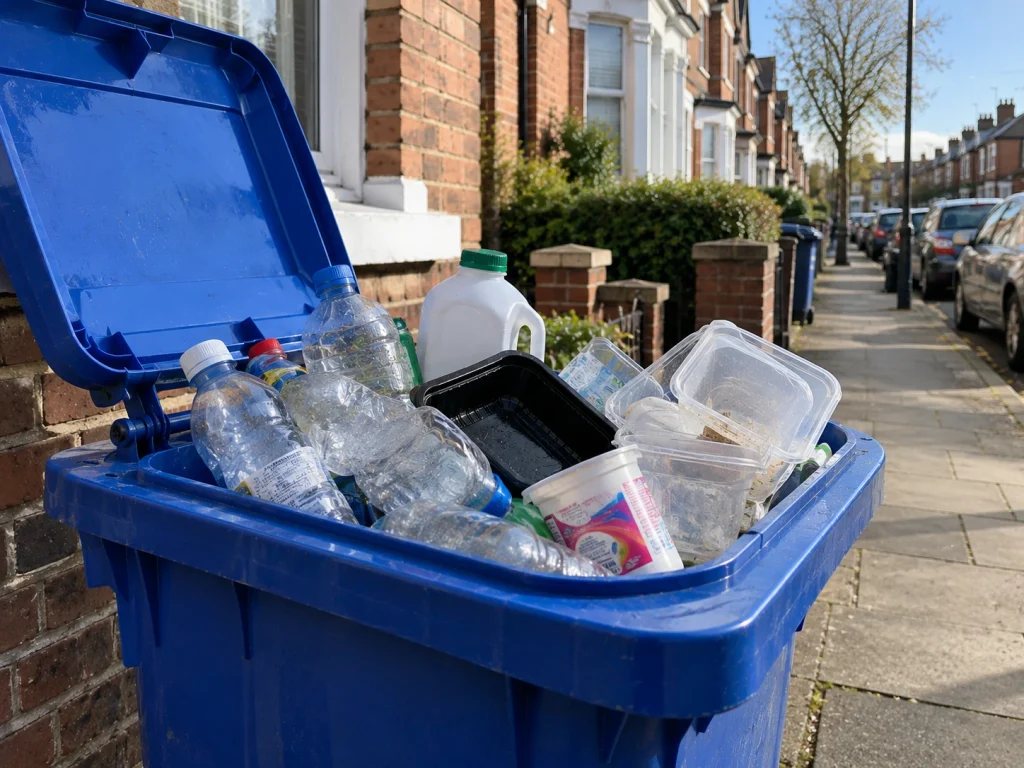
Liverpool City Council accepts several types of plastic packaging in its blue recycling bin, including:
- Drinks bottles
- Shampoo and cleaning-product bottles
- Yoghurt pots
- Plastic tubs
- Food trays
- Plant pots, except black ones
Place accepted items loose in the bin. Keep lids on plastic bottles and do not flatten them, following the council’s instructions.
For unusual packaging, check the Liverpool City Council recycling guidance before disposal.
What Cannot Go in the Blue Bin?
Liverpool’s current guidance excludes plastic bags, cling film and plastic padding. Polystyrene, black plant pots, food, liquids and black bag waste must also stay out of the blue recycling bin.
Do not assume that a recycling symbol means an item belongs in your household collection. Check whether the material is accepted or needs a separate collection point.
How Does Plastic Recycling Work?
The process varies by material and facility, but generally follows these stages:
- Collection: Accepted plastics are collected separately from general waste.
- Sorting: Materials are separated and unsuitable items are removed.
- Cleaning: Suitable plastics are cleaned to remove residue and contamination.
- Shredding: Many plastics are broken into smaller flakes.
- Processing: Suitable material is prepared for reprocessing, often into pellets.
- Manufacturing: Recovered material may be used to make new products.
Not every collected item becomes a new product. Contamination, mixed materials and processing limitations can prevent some plastics from being recycled.
Why Does Plastic Recycling Matter?
Recycling can recover useful materials, reduce demand for virgin plastic and keep suitable packaging in circulation.
It is not a complete solution to plastic pollution. Plastic recycling is one part of sustainable waste management, alongside waste prevention, reuse and responsible disposal.
Plastic Recycling Rules in Liverpool
Liverpool’s rules are important because household collection schemes differ across the UK. The city’s blue bin accepts specified bottles, pots, tubs, trays and certain plant pots, but excludes plastic bags and cling film.
Residents using communal bins should follow the instructions for their building. Do not place accepted recycling inside plastic bags, as the council requires items to be placed loose.
For the latest accepted materials, use the council’s official guidance rather than relying on packaging symbols alone.
What Do Plastic Recycling Symbols Mean?
Numbers inside recycling triangles identify the main type of plastic resin. They help identify a material, but do not guarantee that an item is accepted in your local bin.
| Code | Plastic type | Common examples |
|---|---|---|
| 1 — PET | Polyethylene terephthalate | Drinks bottles |
| 2 — HDPE | High-density polyethylene | Milk bottles |
| 3 — PVC | Polyvinyl chloride | Some pipes and packaging |
| 4 — LDPE | Low-density polyethylene | Some films and bags |
| 5 — PP | Polypropylene | Some tubs and pots |
| 6 — PS | Polystyrene | Some disposable containers |
| 7 — Other | Other plastics or combinations | Specialist products |
These examples describe common uses, not Liverpool’s accepted-items list. The product’s design and local collection rules still determine the correct disposal method.
Common Recycling Mistakes
Leaving food inside packaging
Food residue and liquids can affect recycling quality. Empty containers and follow local instructions on cleaning them before recycling.
Mixing different materials
Packaging made from plastic combined with foil, paper or other materials can be difficult to separate and process.
Putting soft plastics in the wrong bin
Plastic bags, cling film and wrappers may require separate collection. Check whether a local collection point accepts the specific material before taking it there.
Assuming every plastic item is recyclable
Different plastics need different processing methods. When unsure, check the local guidance rather than guessing.
If you have unwanted rubbish that cannot go into your household recycling bin, our rubbish removal service in Liverpool can help with suitable waste collections.
How Can You Reduce Plastic Waste?
Small changes can reduce the amount of plastic entering the waste system:
- Carry reusable shopping bags and refillable bottles.
- Choose products with less unnecessary packaging.
- Reuse suitable containers when safe.
- Buy durable products where practical.
- Separate accepted recyclables from general waste.
- Check disposal instructions for unfamiliar packaging.
Preventing waste and reusing suitable items should come before recycling when practical.
Plastic Recycling for Businesses
Businesses may produce plastic bottles, tubs, trays, wrapping and other packaging. Their waste arrangements can differ from household collections, so commercial premises should check their waste contractor’s accepted materials and collection requirements.
If your business needs help managing general commercial rubbish, explore our commercial waste removal service in Liverpool.
Plastic Recycling FAQs
What Plastic Can Be Recycled in the UK?
Many councils collect plastic bottles, pots, tubs and trays. Accepted items vary by location, so check your local authority’s instructions before recycling other plastics.
Can Plastic Bags Be Recycled in Liverpool?
Plastic bags and cling film are currently excluded from Liverpool’s blue bin. Check for a separate collection point and confirm which materials it accepts before taking your packaging there.
Can You Recycle Black Plastic?
It depends on the item and local collection rules. Liverpool excludes black plant pots from its blue bin. Check the accepted-items list rather than assuming all black plastic is recyclable or non-recyclable.
How Do You Recycle Plastic Bottles?
Empty the bottle and follow your council’s preparation instructions. Liverpool’s guidance says to leave the lid on and not flatten plastic bottles. Place accepted bottles loose in the blue bin.
Does All Collected Plastic Get Recycled?
No. Some material is rejected because it is contaminated, made from mixed materials or unsuitable for the available processing system. Collection does not guarantee that every item becomes a new product.
Where Can You Recycle Plastic Bags and Wrapping?
Some supermarkets and other collection points accept selected plastic bags and wrapping. Accepted materials vary, so check the collection point’s requirements before visiting. Do not put these items in Liverpool’s blue bin while the council’s guidance excludes them.
Are Plastic Recycling Symbols a Guarantee?
No. Resin identification numbers describe the type of plastic, not whether your local authority accepts the item. Always check local collection rules.
Is Recycling Better Than Reusing Plastic?
Reusing a suitable item can extend its life and avoid replacing it. Recycling is useful when an item is no longer suitable for reuse and an appropriate recycling route exists.
Conclusion
The right way to dispose of plastic depends on the item and your local collection rules. In Liverpool, specified bottles, pots, tubs, trays and some plant pots can go in the blue bin, while plastic bags, cling film and black plant pots are excluded.
Check local guidance, avoid contamination and reuse suitable items before recycling them. These steps help households and businesses manage plastic waste more responsibly.