Carbon footprint reduction and business waste reduction go hand in hand. Businesses can reduce unnecessary waste, improve recycling, reuse materials, and manage commercial collections more efficiently. For Liverpool businesses, these practical steps can support better resource management and help reduce avoidable environmental impacts.
This guide explains seven practical ways to reduce waste, improve workplace recycling, measure progress, and understand the recycling requirements that apply to workplaces in England. If your business needs collection support, explore our commercial waste removal service in Liverpool.
Why Carbon Footprint Reduction Matters
A business’s carbon footprint includes greenhouse gas emissions associated with its activities, such as energy use, transport, purchasing, and waste management.
Preventing waste can reduce the resources needed to manufacture replacement products. Reusing suitable items and recycling appropriate materials can also reduce demand for some virgin resources. The actual benefit depends on the material, its previous use, and how it is processed.
Recycling should therefore form part of a wider strategy that includes waste prevention, responsible purchasing, and efficient operations.
7 Ways to Reduce Business Waste
1. Conduct a Waste Audit
Identify the materials your business discards, including cardboard, paper, plastic packaging, glass, metal, food waste, and general waste. Review bin contents, purchasing records, and collection invoices to find avoidable waste and materials suitable for recycling.
Record your starting position so you can compare results after making changes.
2. Separate Recyclable Materials
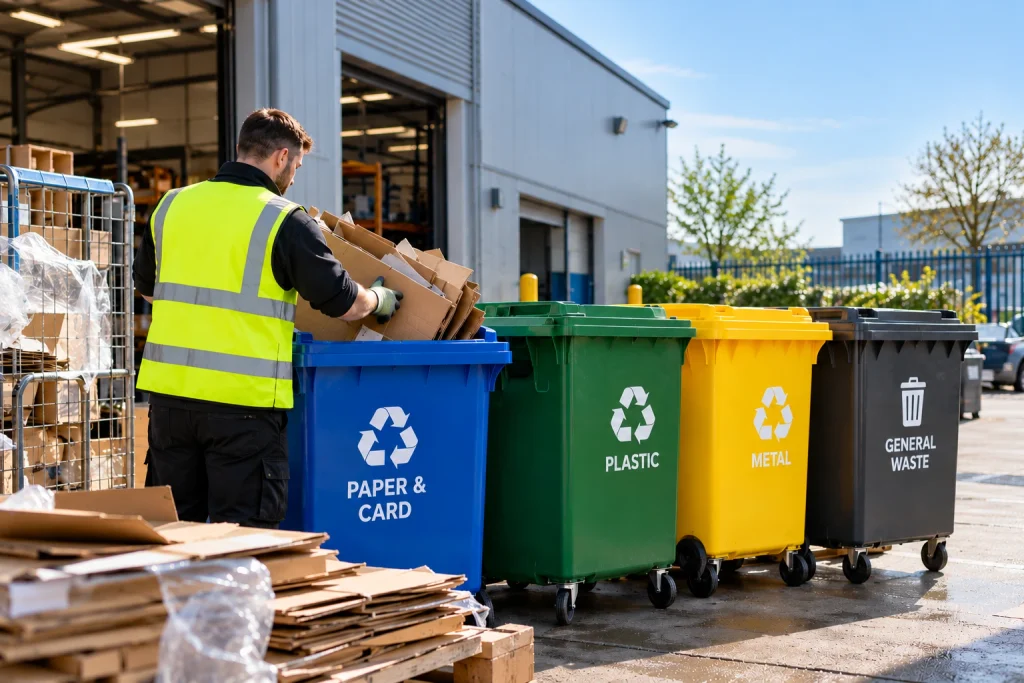
Provide clearly labelled containers for the waste streams your business produces. Follow the separation requirements that apply to your workplace and confirm accepted materials with your waste collector.
Correct separation helps reduce contamination and makes it easier to manage recyclable materials appropriately.
3. Reduce Packaging Waste
Review packaging used for deliveries, stock, and everyday supplies. Where practical, choose products with less packaging, order appropriate quantities, and ask suppliers about reusable transport packaging.
Preventing unnecessary packaging reduces waste before it reaches your premises.
4. Reuse and Repair Items
Reuse suitable boxes, storage containers, office supplies, and equipment before replacing them. Repairing, donating, or passing on usable items can extend their life and reduce demand for new products.
5. Prevent Food Waste
Restaurants, cafés, hotels, and workplace kitchens can monitor discarded food, improve stock rotation, and adjust purchasing quantities. Preventing edible food waste should come first, followed by appropriate management of unavoidable food waste.
6. Train Employees
Explain which materials belong in each container and position bins where waste is generated. Regular staff reminders can reduce contamination and make recycling procedures easier to follow.
Assigning responsibility for checking the system can also help identify recurring problems.
7. Review Waste Collections
Check whether container sizes and collection frequency match your business’s waste volumes. Discuss suitable arrangements with your provider and investigate why recyclable materials may still be entering general waste.
Reviewing collection records can help identify practical improvements without assuming that every change will automatically reduce costs.
Measuring Environmental Progress
Track total waste generated, recyclable quantities, contamination, collection frequency, and waste management costs. Compare consistent reporting periods and account for changes in business activity.
For carbon calculations, use appropriate emissions factors and clearly defined reporting boundaries. The Carbon Trust’s guide to carbon footprinting for businesses explains how organisations can measure emissions and plan reductions.
Workplace Recycling Rules in England
Applicable workplaces in England must follow Simpler Recycling requirements for separating dry recyclable materials, food waste, and residual waste. Paper and card generally need to be collected separately from plastic, metal, and glass unless permitted co-collection conditions are met.
The requirements took effect for relevant workplaces on 31 March 2025. Qualifying micro-firms with fewer than 10 full-time equivalent employees have until 31 March 2027 to comply.
Check the official workplace recycling guidance from GOV.UK for current requirements, exceptions, and collection arrangements that apply to your business.
Sustainable Waste Management in Liverpool
Liverpool businesses produce different types of waste depending on their activities. Offices may generate paper and packaging, hospitality businesses often handle food waste and containers, and warehouses may produce substantial cardboard and transport packaging.
The right approach depends on the materials generated, available storage, and suitable collection arrangements. For more advice on preventing waste and using resources responsibly, read our guide to sustainable waste management.
Businesses looking for collection support can visit Swift House & Waste Removals or explore our commercial waste removal service in Liverpool.
Frequently Asked Questions
How Does Recycling Affect a Business?
Recycling helps businesses recover useful materials, reduce waste sent for disposal, and support environmental goals. Results depend on the materials recycled and the collection process.
How Can Businesses Reduce Waste?
Businesses can audit waste, reduce packaging, reuse materials, improve purchasing, train staff, and separate recyclable materials correctly.
How Can Businesses Improve Recycling?
Provide labelled containers, train employees, prevent contamination, and review collection arrangements regularly.
Does Recycling Reduce a Business’s Carbon Footprint?
Recycling can reduce demand for virgin materials, but the emissions benefit depends on the material and its processing route. Waste prevention and reuse should also be considered.
Does Recycling Save Businesses Money?
It may reduce avoidable waste and improve resource use, but savings depend on purchasing, collection charges, waste volumes, and implementation costs.
Conclusion
Businesses can work towards a lower carbon footprint by preventing unnecessary waste, reusing materials, improving recycling, and measuring progress. Start with a waste audit, address the biggest sources of waste first, and review collection arrangements regularly to support more efficient waste management.